When people evaluate outdoor surveillance, the conversation usually starts with cameras.
What resolution do they offer? How far can they see? Do they support analytics? Can they integrate with the existing VMS? Those questions matter, but they do not tell the whole story. In the field, a camera is only useful if the platform behind it stays powered, connected, protected, and responsive.
Outdoor surveillance does not fail only because a camera fails. It fails when power assumptions break down, when equipment cannot be remotely diagnosed, when devices lock up without a way to recover them, or when outdoor systems cannot coordinate with the security workflows already in place.
Power Sentry Gen3 was built to solve those problems.
The Infrastructure Behind Reliable Outdoor Surveillance
At Mobile Pro Systems, we have always believed that power is not an accessory. Power is the platform.
That belief came from years of building mobile surveillance systems for real deployments. Outdoor platforms face conditions that most building-mounted systems never experience. They sit in heat, cold, wind, rain, snow, and isolated locations. They may be connected to reliable shore power, intermittent scheduled power, solar, DC power, or a combination of all of the above.
In those environments, uptime depends on power design, not the camera.
The platform has to manage voltage, current, battery health, temperatures, charging behavior, network communication, lights, alarms, remote restarts, and diagnostic data. It has to protect itself from avoidable failures. It has to provide visibility before something becomes a service call. And it has to do all of this without requiring constant human intervention.
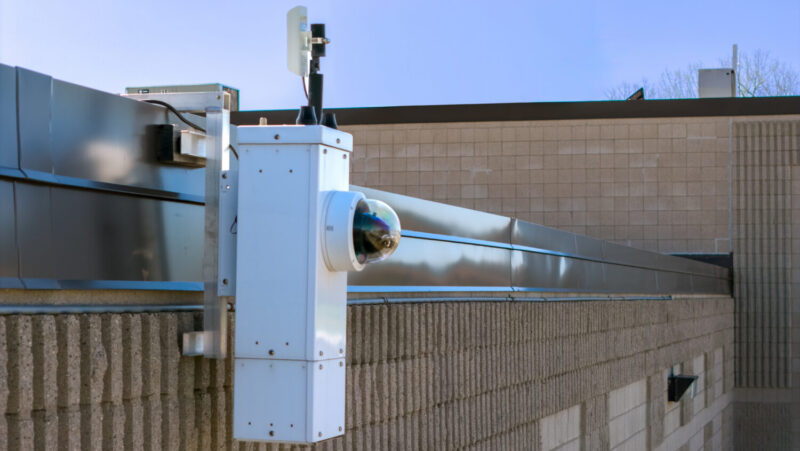
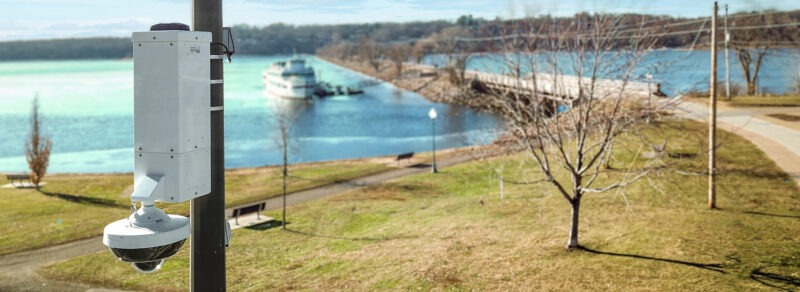
Power Sentry Gen3 extends that thinking into a compact, pole-mounted form factor.
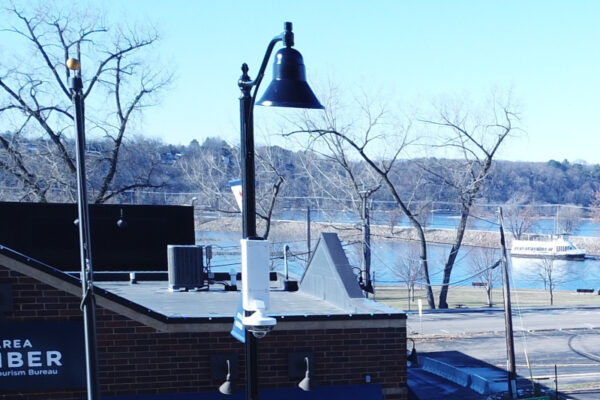
The Power Sentry has always given Mobile Pro Systems customers a way to mount surveillance equipment on poles, buildings, and other fixed outdoor locations, enabling distributed coverage beyond mobile surveillance trailers and traditional building-mounted systems.
Gen3 represents a major step forward in reliability, with a redesigned electrical architecture and smarter system controls that help reduce failure points, improve uptime, and make the platform easier to monitor and manage in the field.
Why Gen 3 Matters
Power Sentry Gen3 moved from a 12-volt foundation to a 24-volt architecture to reduce current, lower electrical stress, and improve long-term reliability in outdoor deployments.
That may sound technical, but the buyer-facing value is straightforward. A 24-volt architecture can deliver the same amount of power with less current. Less current means less voltage loss, less heat, and less stress on connectors and wiring. In outdoor surveillance platforms, that matters because connectors are often the weak point in electrical systems. When connectors carry high current, they heat up. When they are repeatedly heated, they degrade. Over time, that can become a reliability issue.
That engineering decision helps the platform operate more efficiently when running from stored energy, and it supports better reliability even when the system is connected to shore power. For customers, the outcome is not “24 volts” as a feature. The outcome is a platform designed to reduce unnecessary electrical stress, support longer field life, and keep connected systems operating more consistently.
Remote Monitoring and Diagnostics Through MPStatus
MPStatus gives your team visibility into the health of the platform, including power, connectivity, temperature, battery behavior, device status, and camera performance.
A basic power box can turn devices on. Power Sentry Gen3 was built to monitor, manage, and protect the systems it supports.
That distinction matters.
Through MPStatus, each Power Sentry collects roughly 1 million data points per day, monitoring camera performance, connectivity, power, temperatures, battery behavior, device status, and more.
That constant stream of telemetry gives the platform and the people supporting it a clearer picture of system health. Instead of waiting for a camera, radio, battery, or connected device to fail, Power Sentry Gen3 continuously monitors conditions that affect uptime.
For customers, this changes what a pole-mounted platform can be. It is no longer just a place to mount surveillance equipment. It becomes a managed infrastructure point with visibility into the power, connectivity, and environmental conditions behind the camera.
That is the difference between deploying equipment and deploying intelligent infrastructure.
Remote Recovery Reduces Truck Rolls
That intelligence matters most when something in the field stops behaving the way it should.
A camera may lock up. A radio may stop communicating. A network device may need a reset. In a traditional setup, the answer may be to send a technician to the site, access the pole, open the enclosure, and manually restart equipment.
Power Sentry Gen3 helps reduce unnecessary service trips by enabling remote, automated recovery actions. Through MPStatus, teams can diagnose issues, power cycle connected devices, restart an attached computer, adjust schedules, control lights, manage arming states, and configure logic so the platform responds differently based on site conditions.
Field service will always be necessary in some situations, but not every issue should require a truck roll. In many cases, remote recovery can turn a potential site visit into a faster fix.
For critical infrastructure, utilities, commercial facilities, campuses, distribution centers, and public safety deployments, that matters. Uptime is not only about preventing failures. It is also about recovering quickly when something does not behave as expected.
Designed to Work With Your Existing Security Environment
Power Sentry Gen3 also reflects a core Mobile Pro Systems belief: customers should not have to rip and replace their existing security ecosystem.
Many organizations already have a preferred VMS, access control platform, alarm system, monitoring workflow, or IT security framework. They may be using Milestone, Genetec, ExacqVision, or another video environment. They may have enterprise alarm systems that rely on dry contacts or digital inputs. They may have IT teams that require secure, simple network behavior. They may have specific requirements for how alarms, lights, cameras, and monitoring events interact.
Power Sentry Gen3 was built to fit into those environments.
The platform can support camera I/O, dry contact expansion, API interaction, HTTP-based controls, and integration pathways that enable other systems to trigger actions or receive data. In practical terms, that means a customer’s existing VMS or alarm environment can interact with the Power Sentry platform rather than treating it as an isolated device.
For example, Power Sentry Gen3 can support workflows where video events, alarm conditions, lights, strobes, and monitoring actions work together. If an event is detected, the platform can help trigger a visible response, notify the appropriate system, or support the next action inside the customer’s existing security workflow.
That level of integration matters because outdoor surveillance should not operate as a separate island. Power Sentry Gen3 is not about forcing customers into a closed, proprietary stack. It is about giving them a reliable outdoor node that can extend the systems they already use.
Extending Pole-Mounted Surveillance Across Large Outdoor Sites
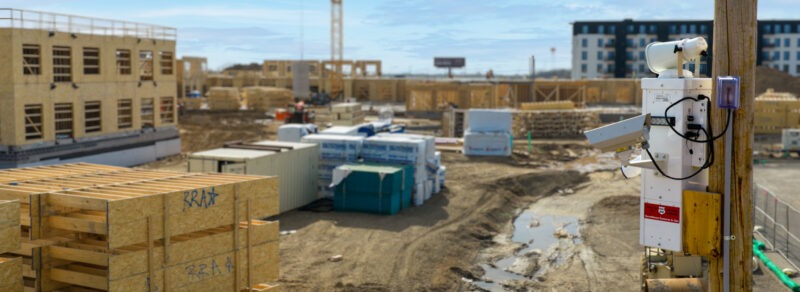
The strongest use case for Power Sentry Gen3 is not a narrow technical spec. It is the reason customers turn to Mobile Pro Systems in the first place: they need reliable surveillance infrastructure in places where traditional security coverage is difficult to extend.
Traditional building-mounted coverage works well when the area that matters is close to the building, the power is straightforward, and the environment stays relatively fixed. But many of the environments Mobile Pro Systems serves do not look like that. Parking lots, utility yards, substations, campuses, distribution centers, works sites, construction zones, remote gates, perimeters, and equipment storage areas involve large footprints, distributed outdoor assets, changing access patterns, remote approaches, and locations where security needs to reach farther than the built environment naturally allows.
Power Sentry Gen3 was built to help close that gap.
It gives organizations a way to extend surveillance infrastructure into places where fixed assumptions break down, without turning every new coverage point into a full construction project. It supports a more deliberate approach to outdoor security planning, where camera placement can follow operational needs rather than being limited to where a building happens to be or where power is easiest to reach.
That makes it easier for both security and technical teams to move forward with coverage expansion. Security leaders gain a better way to reduce blind spots and maintain confidence across the site. Technical teams gain a platform designed with remote diagnostics, field stability, and integration realities in mind. Both sides get a more credible path to expanding coverage without accepting a brittle deployment model.
Why the Gen3 Power Sentry Matters Now
The pressure on outdoor security is not getting lighter. Sites are becoming more distributed. Expectations around uptime and visibility are getting higher. Teams are still being asked to protect more ground with finite staff, finite budgets, and little tolerance for failure.
That environment rewards platforms built around operational reality.
Power Sentry Gen3 reflects a clear belief from Mobile Pro Systems: if you want surveillance to work beyond the built environment, you have to solve the power and management layer with the same seriousness you apply to the cameras themselves. Otherwise, what looks like coverage on day one can become uncertainty later.
We built Power Sentry Gen3 because customers needed more than another outdoor camera mount. They needed a smarter way to extend surveillance infrastructure into places where power, placement, and uptime are harder to solve. They needed a platform designed around reliability, visibility, and field fit.
Talk to Our Team About Power Sentry Gen3
Extend surveillance beyond buildings and fixed camera locations with reliable pole-mounted infrastructure. See how Power Sentry Gen3 supports power management, remote diagnostics, and integration with your existing security systems.
Power Sentry Gen 3
Frequently Asked Questions
What is Power Sentry Gen3?
Power Sentry Gen3 is a pole-mounted outdoor surveillance platform from Mobile Pro Systems that supports cameras, power management, connectivity, remote diagnostics, and integration with existing security systems.
How is Power Sentry Gen3 different from a basic camera mount?
Why does Power Sentry Gen3 use a 24-volt architecture?
Power Sentry Gen3 uses a 24-volt architecture to reduce current, lower voltage loss, reduce heat, and limit stress on connectors and wiring. That supports better reliability in outdoor environments.
Can Power Sentry Gen3 work with existing VMS platforms?
Yes. Power Sentry Gen3 is designed to work with existing security environments, including VMS, alarm systems, monitoring workflows, and other customer-owned infrastructure.