When a mobile surveillance trailer loses power, the first concern in the command center isn’t battery chemistry or panel orientation. It’s the blind spot on the screen—the camera that just went dark over a gate, a staging yard, or an event entrance when coverage is needed most.
Almost every one of those outages traces back to decisions made long before the trailer ever rolled onto the site: how the system’s power was designed, how much load it was expected to carry, and whether the design assumed ideal conditions or real ones.
Power planning sits at the center of reliable mobile surveillance. The way a platform’s power is generated, stored, and consumed determines whether it quietly does its job for weeks at a time—or slowly walks toward an outage the moment conditions shift.
This guide outlines a practical approach to power planning for mobile surveillance trailers. First, it explains why power budgets determine who gets predictable uptime and who experiences unexpected blind spots. Then, it frames how to evaluate two critical architectures.
Understanding Power Budgets
A power budget is simply a structured way of answering two questions:
- Load right now: How much power (measured in watts) does this trailer draw at any given moment
- Energy over time: How many watt-hours or kilowatt-hours does that draw add up to over a day, a week, or a month?
Every device on the trailer—fixed and PTZ cameras, radios, analytics hardware, mast lights, wireless backhaul, even environmental controls—draws from the same finite energy pool. A good power budget turns that reality into numbers you can reason about.
In practice, engineers will build the budget in a spreadsheet. Each row represents a device, and each column captures its wattage and duty cycle. The output is a daily energy requirement in watt-hours. That number, plus your target runtime and climate, is what should drive decisions about:
- How much solar do you really need in your worst season?
- How large must the battery bank be to survive nights and storm stretches?
- Whether a generator is optional for fuel savings or the reliability backbone.
This is also where “good on paper” designs start to diverge from real-world performance. A basic one-camera trailer with limited networking might run comfortably within a modest solar and battery budget. A multi-camera platform with active analytics, lighting, and environmental management can easily double or triple the demand.
Thermal management is a frequent blind spot. In hot climates, cooling fans or other active measures can shrink runtime. In cold climates, battery efficiency falls, demanding more energy to keep components within safe operating temperatures. These loads are real, recurring, and often under-estimated.
A clear, realistic power budget makes three things visible:
- How much solar and backup power are required to sustain operations in tough seasons?
- What “usable” battery capacity looks like before low-power behaviors and shutdown.
- What generator runtime looks like in actual conditions—not ideal lab numbers.
These aren’t minor technicalities to review later. They are the line between maintaining protection and facing unexpected system failures.
The Three Building Blocks of Mobile Surveillance Power
Under every mobile surveillance trailer, regardless of brand or model, the same three building blocks are at work:
Power Consumption
This is the live and always-changing load. Cameras, radios, onboard analytics, deterrence devices (sirens, speakers, strobes), mast lighting, network equipment, and thermal management all draw power. Each addition to the payload—an extra PTZ, a new analytics engine, brighter lighting—pushes the baseline draw higher.
When those additions aren’t fed back into the power budget, the system quietly crosses the line from comfortably sized to perpetually chasing recovery.
Power Generation
This is how energy enters the system:
- Solar arrays on the trailer
- Generators (integrated or external)
- Shore or grid power when available
Solar is attractive because it’s silent, fuel-free, and proven. Generators are attractive because they are controllable and deterministic. Shore power, when available, can simplify everything—but many of the most valuable deployments are exactly where the grid is not.
Power Storage
Storage bridges the gaps when generation drops. Battery chemistry (the specific technology in the battery), usable capacity (the amount of stored energy you can actually use), and total bank sizing (the total storage capacity of all batteries together) decide how long the system can ride through:
- Nighttime when solar is at zero
- Multi-day storms or extended overcast
- Winter low-sun conditions
- Heat waves or cold snaps that drive up thermal loads
Reliability emerges when these three are sized and tuned together, then checked against the actual conditions where the trailers will live, not against an averaged weather model from a very good year.
Two Power Philosophies in the Field
Seen through the lens of real deployments, most mobile surveillance trailers fall into one of two philosophies.
Solar-first designs expect solar and batteries to do all the work. A generator, if present at all, is treated as a last-resort backstop. These designs can succeed when loads are small, deployments are short, sunlight is strong and predictable, and downtime during bad weather is tolerable.
As deployment lengths increase, weaknesses emerge. Weather swings more widely, panel positioning and shade change with the seasons, and mission creep pushes the baseline draw higher. Systems that were “fine” in month one start riding the edge by month six.
Reliability-first hybrid designs flip the mental model. Uptime comes first. The generator is treated as the deterministic energy source, and solar’s job is to reduce runtime and fuel usage—not to carry the entire mission.
On a spec sheet, these philosophies can look similar. But over storms, heat waves, and seasonal shifts, they behave very differently. One depends on continued good luck. The other plans for the hardest days use automation and telemetry to keep trailers online when conditions are at their worst.
Where Solar-Only Reliability Breaks Down in the Field
Solar has earned its place in off-grid deployments. It is quiet, scalable, and well understood. But in mobile surveillance, treating solar alone as the backbone of reliability is one of the most common reasons systems fail during long-term deployments.
The issue is not that solar is “bad.” The issue is that solar is inherently variable, while mobile surveillance is often mission critical.
Two realities tend to expose the limits of solar-only systems: the natural variability of solar production and the gap between ideal designs and real-world deployments.
Solar Is Inherently Variable
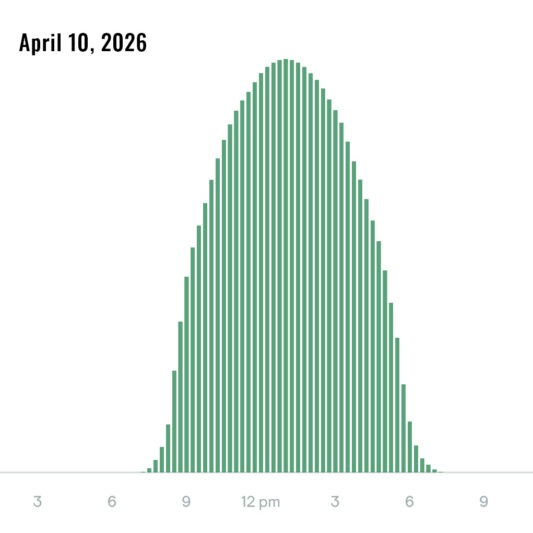
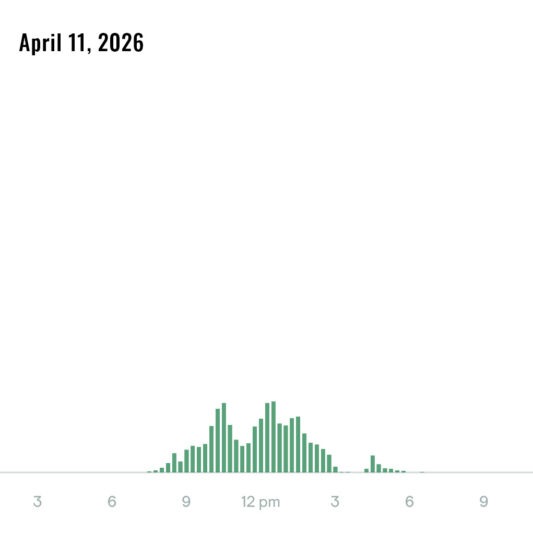
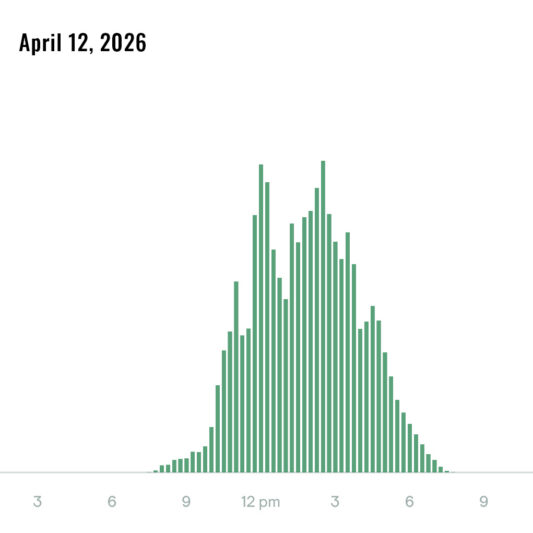
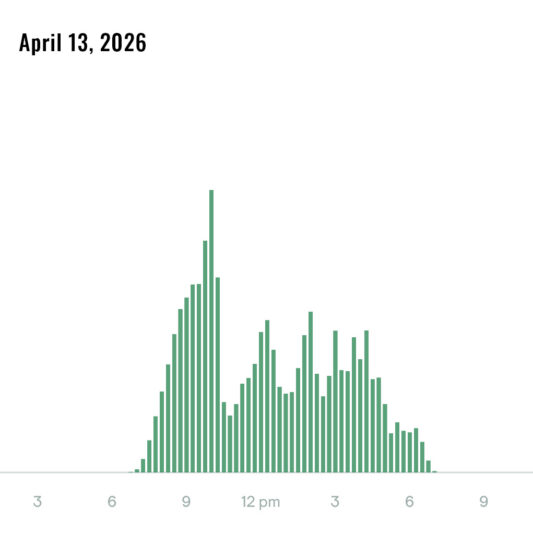
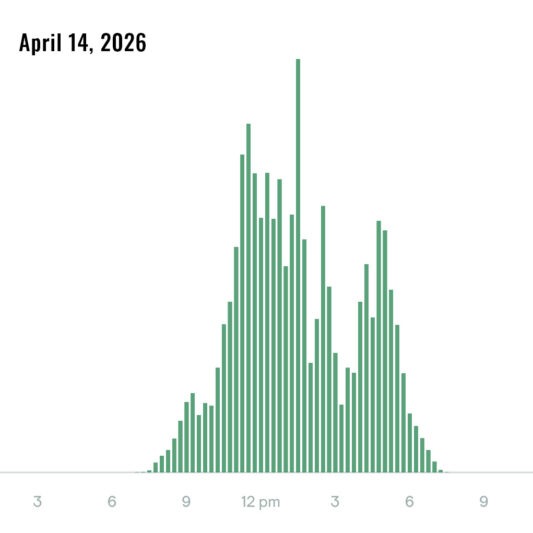
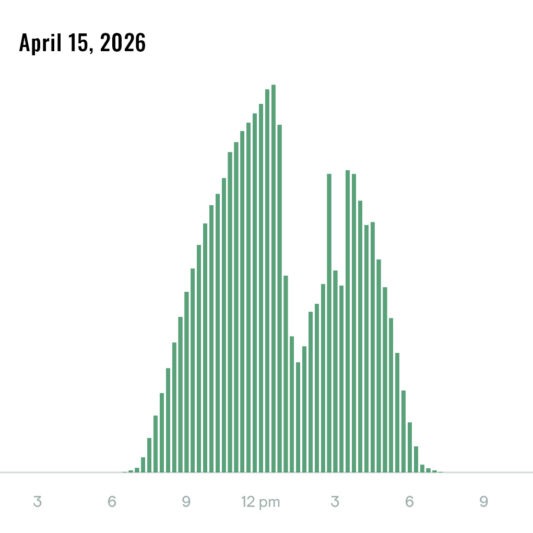
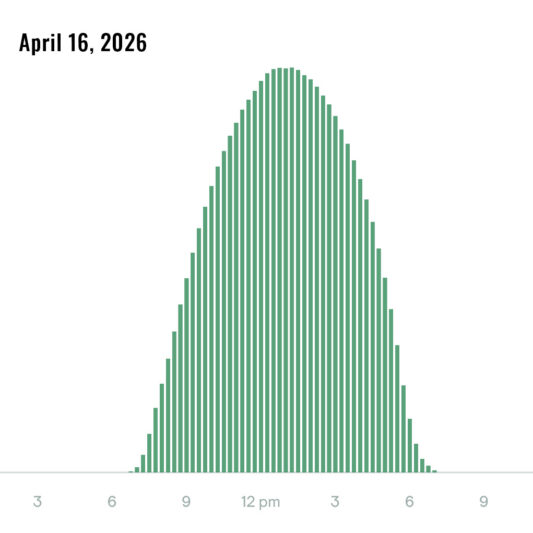
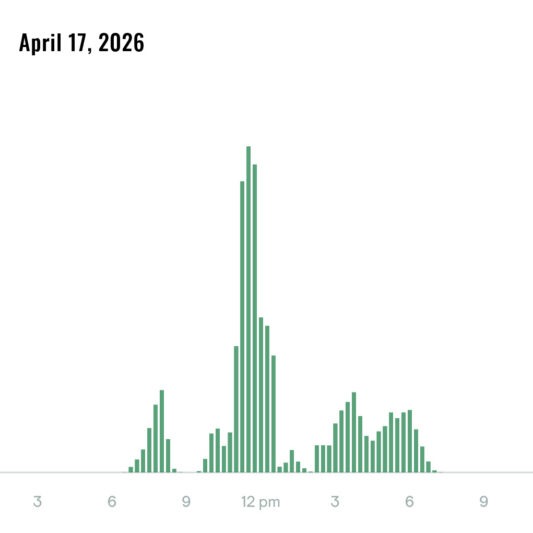
Even in regions with strong sunlight, solar production fluctuates constantly.
- The sun goes down every night, so stored energy must carry the system until morning.
- Storms and extended overcast can reduce production for days at a time.
- Smoke, dust, and pollution can significantly cut output.
- Cloud cover and panel conditions can change usable production hour by hour.
Solar-only systems can work—but only when several favorable conditions hold together:
- The power budget is modest and tightly controlled.
- Sites receive strong, consistent sun during the seasons that matter most.
- Panels are well oriented with minimal shading and are regularly cleared.
- Deployments are short-term, and equipment is serviced or recharged regularly.
Short-term deployments are one of the environments where solar-only trailers often perform well. For example, a trailer deployed for a few days or a week at a temporary site can rely on solar and battery reserves, knowing that it will be collected, serviced, or repositioned before seasonal weather patterns or load growth become an issue.
In those long-duration deployments, solar variability becomes far more significant. Public safety agencies, infrastructure operators, and enterprise security teams rarely operate in environments where multi-day outages are acceptable.
When daily energy consumption approaches—or exceeds—what winter solar can reliably replace, you don’t have a solar solution. You have an outage timer.
Designs Meet Real Loads and Climate
Many solar-centric designs look adequate on a spec sheet, only to struggle in the field once real payloads and weather patterns interact over weeks and months.
Two patterns show up repeatedly:
- Thermal management loads in extreme temperatures. In hot environments, cooling fans or active cooling can add a material, often an unmodeled draw. In cold regions, batteries can’t deliver or accept charge as efficiently, which effectively shrinks usable capacity. Either way, autonomy shrinks.
- Mission creep. A trailer that launched with a modest payload gains capability over time—additional cameras, higher-resolution analytics, mast lighting, and new radios. Each of those changes is operationally sound but raises the baseline load. If no one revisits the power budget, the system drifts from its original design.
A quick audit is often revealing: list every add-on installed after deployment and ask how many were captured in the original power calculations. That simple exercise frequently explains why a trailer that “should be fine” is now dropping offline after storms or during seasonal transitions.
Over time, small shortfalls in daily solar recovery compound. Batteries begin each day slightly less charged. After enough consecutive marginal days, the system simply runs out of energy.
Hybrid Power: The Reliability Backbone
Hybrid power systems—those combining batteries, solar, and a generator—are the architecture serious off-grid applications return to when uptime really matters. Telecom sites, remote infrastructure monitoring, and long-term surveillance deployments all lean on this model for the same reason: it delivers deterministic uptime.
One principle makes the behavior easy to understand:
Batteries are storage, not generation. They do not create energy; they store and smooth it.
In a hybrid system, the generator is the reliable workhorse that can deliver power:
- In the middle of the night
- During storms and extended periods of overcast.
- Through snow cover or low-sun seasons
- When loads increase beyond what solar can reasonably recover
Solar is still valuable—but as an efficiency engine, not a single point of failure. It reduces how often the generator needs to run, stretches fuel, and improves total operating cost while keeping uptime as the non-negotiable priority.
A well-designed hybrid controller doesn’t simply run the generator continuously. Instead, it:
- Starts the generator when batteries reach a defined threshold or when temperatures threaten reliability.
- Charges batteries in efficient regions of their curve.
- Shuts down before wasting fuel on low-efficiency trickle charging.
The result is a system that behaves predictably under stress. It can protect itself with cold-weather behaviors, shed noncritical loads gracefully before shutdown, and surface telemetry that lets teams intervene before a site goes dark.
Designing for Reliability in Your Region and Mission
Designing for reliability means planning for the toughest days, not just the best-case scenarios on a spec sheet. When evaluating mobile surveillance options, it’s crucial to focus on worst-case reliability. This mindset ensures that your platforms will remain online when it matters most, regardless of season, weather, or mission changes.
Latitude, climate, deployment duration, and human behavior all play important roles in shaping the right power strategy. High-latitude winters bring short days, low sun angles, and challenging battery behavior, while hot southern climates pose their own thermal management challenges. Most trailers remain in place for months at a time, so any solution that depends on perfect solar alignment or regular manual repositioning should be viewed skeptically. Year-round deployments should be sized and oriented for winter performance, not just summer peaks.
- Latitude and climate: High‑latitude winters combine short days, low sun angles, snow, and cold‑battery behavior. Hot southern regions combine strong sun with very high thermal loads. Ask vendors how their power budgets and panel designs account for those realities—not just an average summer day.
- Deployment duration: Year‑round or multi‑season deployments should be sized and oriented for winter performance and survivability, even if that means “giving up” some theoretical summer production. Shorter, truly seasonal deployments may offer more flexibility, but they still need a plan for storms and shade.
- Human behavior: Assume that trailers will remain in one place for months and that crews will be busy. If a solution depends on perfect solar alignment and regular manual re‑positioning to meet uptime promises, treat that as an operational risk.
When working with vendors or internal teams, straightforward questions can reveal whether the power fundamentals have been addressed: What power budget was used for this configuration, and how was it built? Are there real or modeled production curves for your latitude during winter and shoulder seasons? How does the system handle low batteries and poor solar conditions—what shuts off first, and how are you notified? Is the generator a primary reliability anchor, or just a backup if the solar plan fails?
- “What power budget are you using for this configuration, and how was it built?”
- “Can you show real or modeled production curves for our latitude in winter and shoulder seasons—not just peak summer?”
- “How does the system behave when batteries are low, and solar is poor? What shuts off first? How are we notified?”
- “Where does the generator fit: is it the primary reliability anchor, or just a backstop if the solar plan fails?”
It’s not about running the calculations yourself. It’s about making sure someone has, and that the answers support the level of operational readiness your mission demands.
Power Design Ultimately Determines Uptime
Bringing all of these considerations together, it becomes clear how power generation, consumption, and infrastructure extension interact to create truly reliable mobile surveillance platforms. When generation and consumption are properly aligned, platforms can operate at the edge of lots, campuses, and event spaces for weeks or months without interruption. Reliability and readiness aren’t just buzzwords—they’re the result of deliberate design and ongoing attention to power fundamentals.
- Power generation (solar, generator, or shore power when available) determines how energy enters the system.
- Power consumption—your cameras, networking, analytics, lighting, and environmental loads—sets the power budget.
- Infrastructure extension is what you gain when those two are aligned: platforms that can live at the edge of lots, yards, campuses, and event spaces for weeks or months at a time.
- Reliability and readiness are the outcomes: platforms that operate as part of a connected security ecosystem, rather than standalone hardware parked in the field.
Leaders evaluating mobile surveillance options should treat the power budget as a first-class topic—on par with coverage, networking, and integration. Ask how the design will perform during your worst season, at your real sites, and with actual loads. What happens when the sun disappears for a week or a heat wave pushes cooling systems to their limits? What alerts you to a problem before it turns into an incident?
Ask how the design will perform in your worst season, at your actual sites, with your typical loads. Ask what happens when the sun disappears for a week or when a heat wave drives cooling fans into overdrive. Ask what tells you there’s a problem before the first 911 call comes in from a darkened site.
In mobile surveillance, cameras and analytics get the attention—but power determines whether they work when it matters. No matter how advanced your cameras or analytics may be, it’s the power design—built on a disciplined power budget and a hybrid energy architecture—that ultimately dictates whether your system is online during critical moments.
A platform with a disciplined power budget and hybrid energy architecture doesn’t just reduce downtime. It creates operational trust: the confidence that, when an incident occurs, the system you deployed will remain online, watching and recording. This is the true foundation of reliability in the field—because every other capability depends on it.
Reliability isn’t an accident. It’s the result of deliberate power design.
Power is What Makes the Ecosystem Possible.
A mobile surveillance platform can carry the right cameras, connect to the right VMS, stream into a real-time crime center, and support remote monitoring teams — but none of that matters if the platform cannot stay online. Once power becomes unreliable, the unit stops functioning as part of the security stack and becomes another field asset that has to be checked, serviced, or recovered.
That is why power planning is not separate from integration. It is the foundation that enables a mobile surveillance trailer to serve as a reliable node within a larger security ecosystem. The VMS depends on the feed. The monitoring center depends on the connection. The response team depends on the alert, the recording, and situational awareness being in place when conditions change.
Reliable power turns mobile surveillance from hardware parked in the field into infrastructure that the rest of the operation can trust.
For teams extending security beyond buildings, campuses, and fixed camera networks, that distinction matters. The goal is not simply to deploy a trailer with cameras. The goal is to extend the reach of the security program with a platform that remains visible, connected, and operational in the moments that matter.
That is the real role of power in mobile surveillance. It is not just what keeps the lights on. It is what keeps the platform connected to the mission.
Talk to Our Team About Reliable Off-Grid Surveillance
If you’re evaluating mobile surveillance trailers for remote, temporary, or long-duration deployments, power planning should be part of the conversation from the start. Our team can help you compare solar-only and hybrid power architectures, understand deployment requirements, and choose a platform built for dependable uptime in real field conditions.