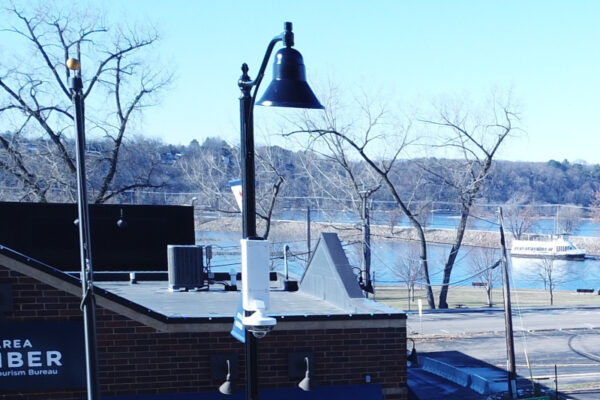
Walk through any well-run facility, and you’ll pass dozens of cameras nobody is worried about. They are connected to building power and a wired network. The VMS confirms their feeds. IT monitors their switches. Their reliability is inherited from the built environment around them so thoroughly that no one asks, at two in the morning, whether the camera over the loading dock is actually recording.
Now park a mobile surveillance unit at the edge of that same property. It carries its own power, its own connectivity, and its own exposure to weather, load, and distance. None of the built environment’s quiet guarantees come with it. The question nobody asks about the loading dock camera is suddenly the only question that matters: is it actually working, right now?
There’s a hard truth underneath that question. If you can’t verify that a mobile surveillance unit (MSU) is recording, what you’ve deployed isn’t surveillance; it’s scenery. If a flashing blue light is the goal, there are far cheaper ways to put one on a pole.
The difference between scenery and security infrastructure is verification. An MSU has to earn the same trust you place in the cameras of your built environment.
That’s what telemetry is for. At Mobile Pro Systems, it’s the job of MPStatus.
Telemetry sits between two things you already rely on
Two ideas anchor how MPS platforms earn trust in the field.
- The first is that dependable coverage starts with dependable power — the foundation that keeps a platform running through multi-day cloud cover and unmanned stretches.
- The second is that a platform is only as valuable as its fit inside your existing security ecosystem — the VMS, monitoring center, and workflows your team already runs.
Telemetry is what connects the two ideas. Power planning decides whether a platform can stay online. Ecosystem integration decides whether its feed is actionable. Telemetry is the live signal that tells you whether both are actually true at this moment — and alerts you the instant they are not. Without it, a sound power design and a clean integration are still assumptions you’re making about a site no one is standing next to. Telemetry turns those assumptions into a status you can see.
Trusted nodes are made of three certainties
Treating mobile units as nodes in your existing security ecosystem is a design philosophy. Telemetry is what makes it operationally real.
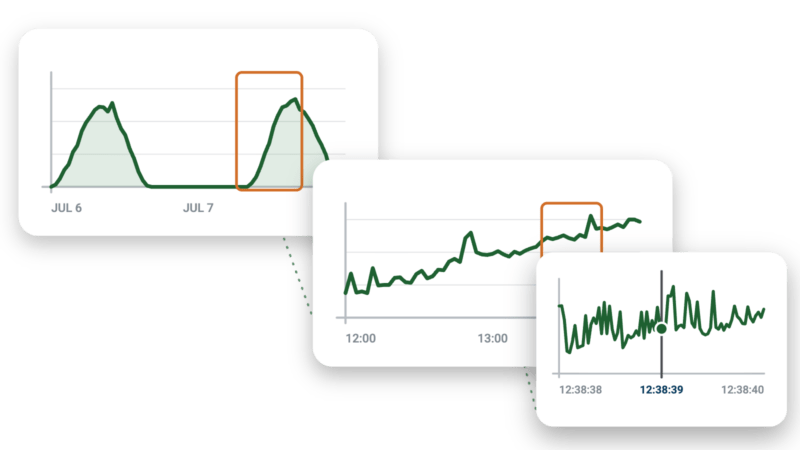
MPStatus continuously tracks the health of every MPS platform in real time, collecting over one million data points per platform per day, and three things become certain when it’s in place.
Communication: you know the unit is online and feeding your systems, and you find out it needs attention before an incident makes that question urgent.
Power: the unit is operational when and where you need it, whether that’s overnight deterrence, a weekend event, or a months-long critical infrastructure deployment.
Location: GPS-confirmed positioning means the coverage you mapped is the coverage you have.
When those three things are in place, your VMS, RTCC, or monitoring center can treat a mobile unit the way it treats fixed infrastructure — as a trusted node, without reservation, and without your team babysitting a standalone system to confirm it’s working.
A trusted node can explain itself
Knowing a unit is online is the floor. Trust also means that when something changes, you can see why — without a site visit.
Every camera, light, radio, and computer on an MPS platform is individually powered and individually metered down to the second. That granularity matters more than it sounds. Camera power draw varies widely; one model might draw a fraction of an amp while another draws four, and camera choice is the single biggest variable in how long a site runs. So when a battery is draining faster than planned, the dashboard doesn’t just alarm; it shows you which device is responsible. Battery state-of-charge trends indicate whether a site is recovering to full charge each day or sliding into a deficit. Solar production is measured against what the season and site should deliver. Temperatures, generator function, signal strength, and GPS position round out the picture.
A fixed camera inherits trust from the infrastructure IT already monitors — the switch it’s plugged into, the network it rides, the power behind it. An MSU has none of that surrounding infrastructure, so it has to answer for itself: every question a technician would check on-site, checkable from a browser.
The camera over the loading dock never has to answer the two-in-the-morning question; the building answers it. A mobile unit has to answer for itself, and telemetry is how it does so, continuously, in writing. That verification is what makes Mobile Pro Systems platforms the most reliable in the industry: power, presence, and position, proven every second.
MPStatus is included intelligence across the full MPS platform line — Commander, Falcon, and Power Sentry. It’s what lets a mobile unit earn the same level of trust as cameras and sensors in your built environment.
Talk to Our Team About Reliable Off-Grid Surveillance
If you’re deploying mobile surveillance for remote, temporary, or long-duration sites, our team can show you how MPStatus telemetry confirms power, communication, and position in real time.
Frequently Asked Questions
What is fleet telemetry for mobile surveillance?
Why does a mobile surveillance unit need telemetry if it has cameras?
What does MPStatus monitor?
Battery state of charge, solar production, individual circuit loads, generator function and runtime, system temperatures, GPS position, communication status, and more. MPStatus collects over one million data points per platform per day so that you have full visibility to every variable.