Challenge
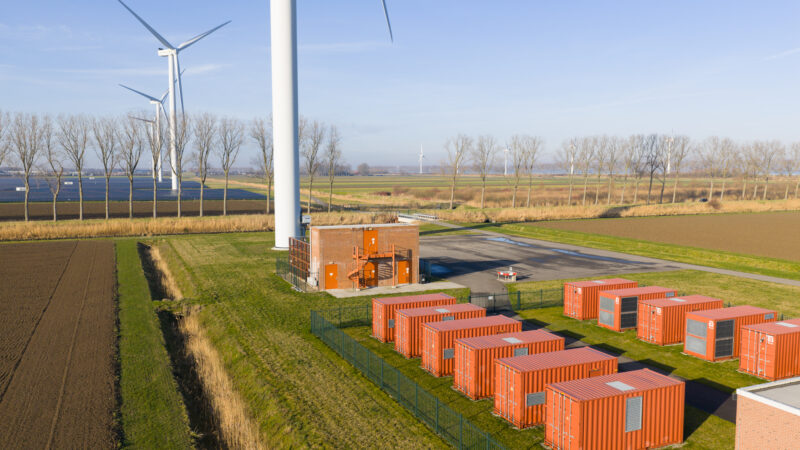
A New York battery energy storage system operator needed to support video monitoring requirements for an active ESS site. Under Section 1207.4.9.1 of the 2025 Fire Code of New York State, qualifying electrochemical energy storage systems must be monitored by video surveillance. The requirement includes at least 72 hours of available footage, coverage of the ESS enclosure area and facility entry points, and access to video for the fire department and fire code official after an incident.
For the site team, the requirement was clear. The harder part was implementing coverage across a spread-out outdoor environment. The areas that needed visibility were not concentrated at a single convenient infrastructure point, which made traditional fixed-camera planning more complicated.
The team needed a way to position cameras based on the monitoring requirement, support recorded video through the site’s video system, reduce dependence on building-mounted infrastructure, and avoid major electrical work at every camera location.
Solution
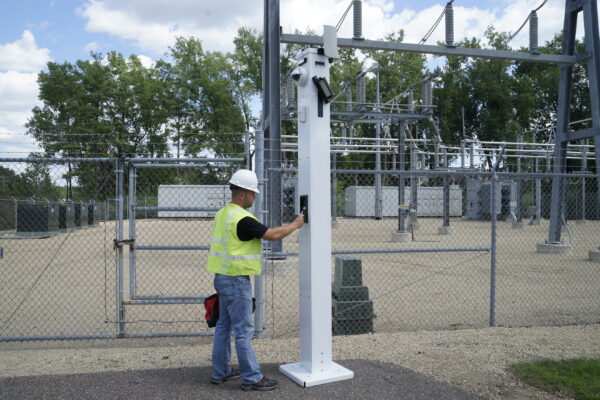
Mobile Pro Systems Power Sentry was deployed around the site to extend surveillance coverage where existing infrastructure could not easily reach. Because Power Sentry is a pole-mounted platform, the site team had more freedom to build the camera layout around the BESS monitoring need rather than around building corners, available outlets, or pre-existing conduit. That made it easier to place surveillance closer to the areas that required visibility without turning every camera location into a larger electrical project.
A key advantage was Power Sentry’s flexible power design. Depending on the location, Power Sentry can support fixed AC power, cycled AC power from parking lot or streetlight circuits, direct solar, low-voltage DC feed, and battery backup configurations. That flexibility helped the team tailor the power strategy to each part of the site rather than forcing every monitoring point into a single installation model.
Multiple Power Sentry platforms were used to create a broader field of visibility across the property. The platforms could also work together in alarm groups, allowing the site to coordinate responses across several monitoring points while still identifying the originating alarm.
Result
By deploying Power Sentry, the site was able to create a more comprehensive video monitoring footprint without being constrained by existing building-mounted infrastructure. The customer’s video management, recording, and retention configuration supported the required storage for footage and the post-incident access workflow.
Just as important, the team was not forced into a one-size-fits-all power strategy. Power Sentry gave the deployment greater flexibility across locations with varying infrastructure conditions, helping reduce the need for trenching, new conduit, additional utility work, or other infrastructure upgrades that can slow outdoor surveillance projects.
The deployment helped the organization meet code-driven video monitoring requirements, place cameras where coverage was needed, reduce the need for major electrical work, scale visibility across multiple platforms, and create a more coordinated monitoring layer across the site.