Challenge
A regional construction contractor operates several unmanned storage yards across rural counties to hold machinery, tools, copper wiring, and fuel tanks for ongoing infrastructure projects. Because these yards lack permanent power and network connections, their security plan relied on manual inspections and expensive overnight guard services. Over a six-month period, multiple thefts resulted in substantial material losses, damaged fencing, and schedule delays due to missing equipment. Even when intrusions were detected, limited lighting and lack of video verification led to delayed response and poor incident documentation.
Solution
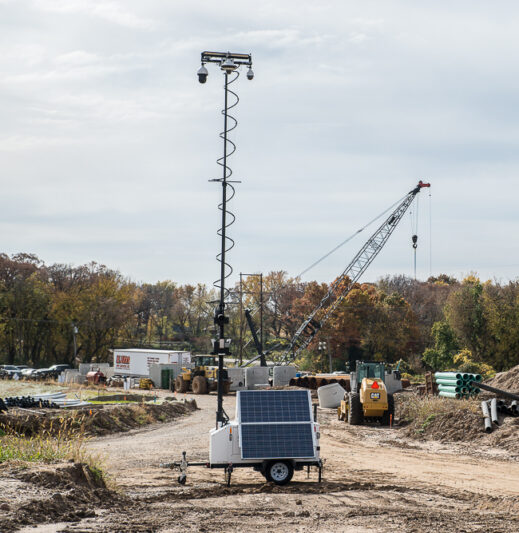
A layered protection strategy was deployed featuring mobile surveillance units with integrated camera towers, deterrent floodlighting, thermal imaging, motion detection, and two-way audio. Each mobile surveillance unit was equipped with a solar charged battery system and LTE connectivity for autonomous, uninterrupted operation even in off grid environments. The towers were strategically placed to cover access points and yard perimeters, with onboard computing that used analytics to differentiate between human, vehicle, and environmental movement to minimize false alarms.
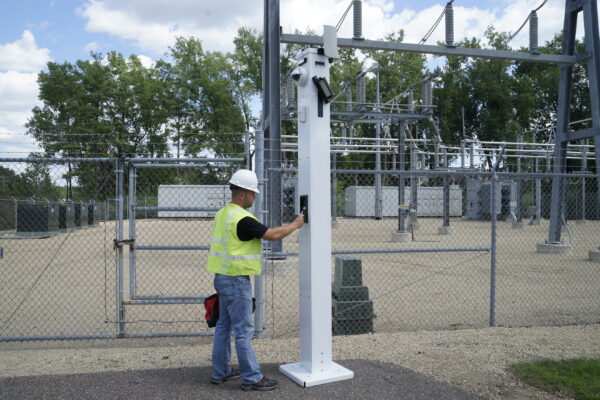
Complementing the mobile surveillance units, IoT monitoring solutions provide environmental and asset specific telemetry: gate contact sensors, vibration modules on storage containers, and GPS location tracking tied to fuel tank movement. All data from mobile surveillance units and IoT sensors flowed through encrypted LTE connections to a monitoring platform, delivering live video, instant alarm notifications, and audible deterrent control. When motion was detected, lights activated automatically, and a remote operator could verbally challenge intruders through the system’s audio often stopping thefts before they began.
Result
The mobile surveillance solution delivered immediate operational impact with minimal effort from the contractor’s staff. With no wired infrastructure required, each unit could be repositioned using a pickup truck and fully deployed in under 30 minutes. As projects shifted locations, the same units were quickly redeployed, providing instant protection for new sites without added labor or configuration time.
Within four months, theft attempts dropped dramatically. Three intrusion events were stopped on-site through audible deterrence before suspects could breach entry. Verified alerts reduced false positives by 85%, enabling field teams and law enforcement to respond to real threats within minutes rather than hours. The ability to rapidly move mobile surveillance assets between job sites transformed their security posture from reactive to proactive—boosting uptime, safeguarding valuable inventory around the clock, and eliminating the need for additional personnel.