Challenge
For airports, transportation hubs, and large industrial facilities, vehicle access gates present an ongoing challenge: the need to maintain tight control and documentation while ensuring the efficient flow of traffic. Traditional manned gates slow operations, create opportunities for missed verifications, and make compliance auditing difficult. Meanwhile, installing permanent gate automation infrastructure requires weeks of labor and heavy investment. A typical fixed system—including trenching, cabling, and lateral power lines—can cost upwards of $75,000 to $120,000 per site and take 2 to 6 weeks to complete.
For facilities that experience seasonal demand peaks, temporary contractor activity, or shifting access control layouts, this kind of investment locks security into a static footprint that is unable to adjust to future operational needs or respond quickly to emerging risks.
Solution
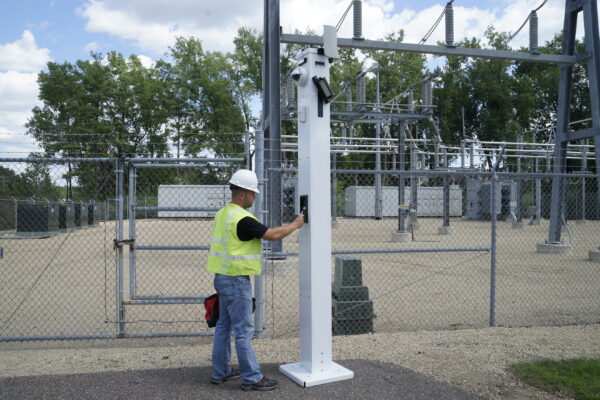
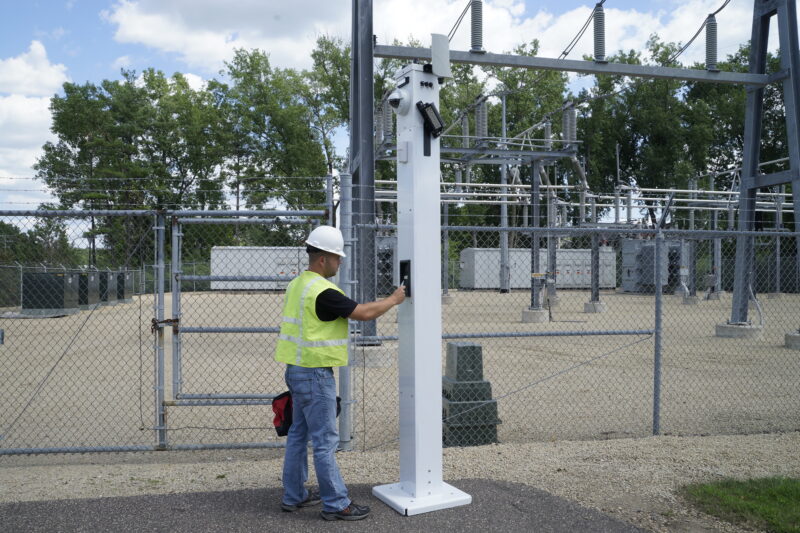
The Mobile Pro Systems Gate Sentry offers an immediate, modular alternative for automated vehicle identification, advanced credentialing, and access management—without the limitations of permanent infrastructure. Designed for plug and play flexibility, the Gate Sentry platform accommodates a wide range of components and configurations, allowing users to tailor performance to site-specific needs.
Key modular features:
- Dual camera LPR system that captures both license plates and driver imagery to maintain verifiable records.
- Audio and lighting control modules activate automatically or by operator command to deter tailgating and signal entry clearance.
- Badge and RFID access options ensure layered identity verification for drivers and ground crews.
- Sensor integration support enables barrier management, vehicle detection, and automated alert creation.
- LTE or Wi-Fi connectivity links all verification data directly into a facility’s command platform for live monitoring or remote authorization.
Result
Gate Sentry replaced manual gate logs with fast, digital, video‑verified entries, improving vehicle flow, reducing credential errors, and speeding up incident reviews. Its modular design allowed the same unit to support staging zones, temporary gates, or emergency access points with simple on‑site adjustments.
Deployment became dramatically more efficient: each unit installs in under a workday with no trenching, redeploys within hours, and reduces setup time by up to 90% compared to permanent infrastructure. Organizations also cut gate‑automation capital costs by more than 60%.
In daily operation, Gate Sentry functions like a fixed checkpoint but with far greater adaptability. It futureproofs vehicle access management by providing a repeatable, mobile foundation that expands with evolving sensor technology, ensuring operators can adapt to new security requirements without redesigning infrastructure.