Challenge
Major incidents such as wildfires, floods, and industrial accidents often require the rapid establishment of evacuated or restricted areas, with perimeter boundaries shifting as hazards change, debris is cleared, and utilities are restored. These evolving conditions rarely match existing infrastructure: fixed cameras, street lighting, and access controls are tied to normal traffic patterns, not emergency “no‑go” footprints. As a result, side streets, service roads, informal access points, and rear approaches are often left uncovered—especially in residential and light‑industrial areas that were never designed for sustained access control.
At the same time, emergency management and law enforcement teams must control entry to damaged neighborhoods and commercial corridors. Maintaining consistent access control across a moving perimeter becomes difficult, increasing exposure to opportunistic crime, unauthorized entry, and disputes over who was allowed into restricted zones.
Solution
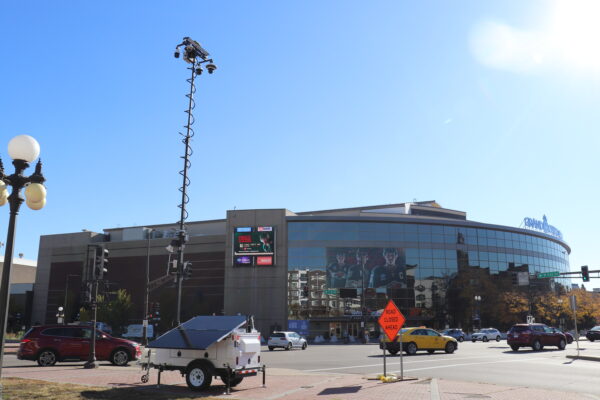
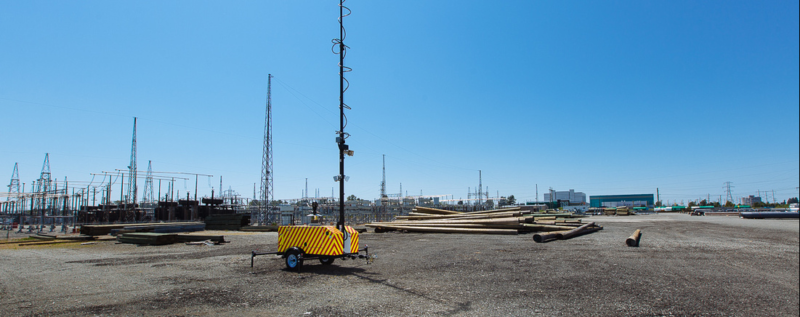
Mobile Pro Systems deploys mobile surveillance platforms to establish a temporary perimeter around the incident zone, positioning trailers at key entry roads, checkpoints, and critical assets such as fuel depots, staging areas, or equipment yards. Elevated cameras extend visibility over intersections and approach routes, allowing supervisors in the emergency operations center to monitor multiple access points at once rather than assigning personnel to each location. This added visibility supports access control, responder safety, and coordinated decision‑making during fast‑moving incidents.
As evacuation routes, closure lines, and access rules evolve, units are repositioned to match updated perimeter boundaries and recovery work zones, maintaining coverage without new construction or permanent installations. Live video feeds and recorded footage provide a shared operating picture for incident command, mutual‑aid partners, and public works, supporting decisions about when to tighten, shift, or reopen access while documenting how the perimeter was managed throughout the life of the incident.
Result
With visible mobile surveillance platforms in place at temporary perimeters, evacuated and restricted areas are more clearly controlled, and unauthorized entry becomes easier to detect and deter even when staffing is thin. Jurisdictions that pair camera-supported perimeters with controlled access commonly report double‑digit reductions—often in the 20–30% range—in opportunistic theft and vandalism compared to unmanaged periods in similar conditions, along with fewer disputes about who entered restricted zones.
Mobile Pro Systems also provides emergency management leaders with a defensible, location‑specific record of how perimeters were established, adjusted, and maintained over the life of an incident. Evidence‑grade video and access data support reimbursement and insurance claims, after‑action reviews, and briefings with councils and boards, while reducing reliance on anecdotal accounts. At the same time, agencies are able to use sworn and civilian staff more efficiently—monitoring multiple access points remotely and re-allocating personnel to life‑safety, recovery, and community‑facing priorities across the broader response effort.